Understanding Canker and what to do if you suspect it.
By
Paul Conroy BSc(hons) AWCF
Introduction.
Canker is a chronic disease affecting the horn-producing tissues of the hoof. Although it is widely considered to involve an infectious component, the exact cause remains unclear. It generally starts in the frog and can remain there, but this is where it differs from thrush, canker has the ability (and all too often does), invade the adjacent sole, bars and hoof wall.
It is sometimes referred to as hoof rot or even hoof cancer (neither are strictly true).
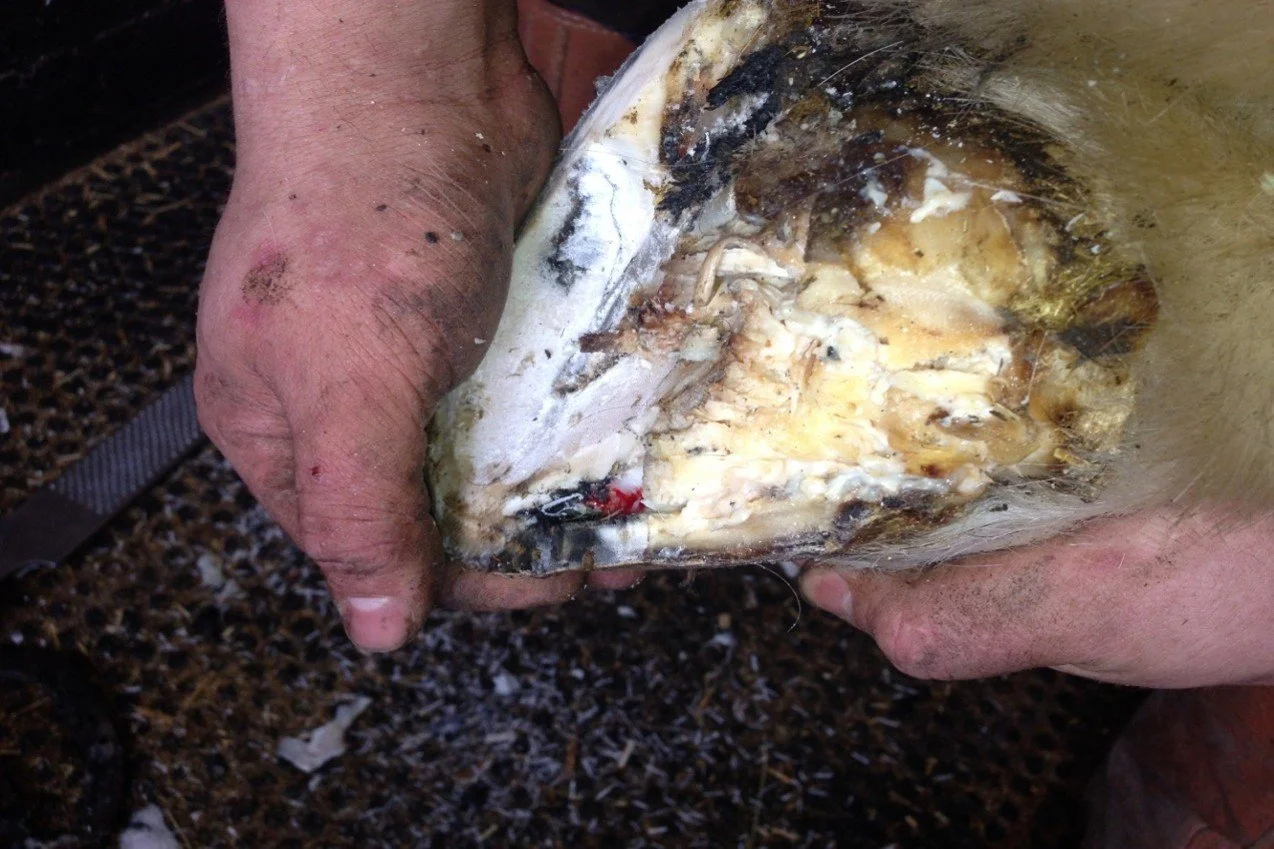
The photograph above shows an advanced case I treated several years ago. You can clearly see how extensively the disease has invaded the side of the hoof.
Causes.
Canker can occur in one foot, or multiple feet may be involved. The disease is commonly seen in draft breeds and again the type of traditional cob or coloured horse with deep sulci and small sunken frogs but can affect any breed or sex.
The cause of canker remains elusive, but wet environmental or moist unhygienic conditions have traditionally been thought to act as a stimulus, however, canker is commonly seen in horses that are well cared for and horses who receive regular hoof care. One theory is that chronic thrush may weaken the frog and create conditions that allow canker to become established.
Signs to look out for:
There are many but I want to focus on just three signs that are easy to spot if you know what you’re looking for.
1. The first I have already touched on, it generally starts in the frog and can be mistaken for thrush, or it will sit alongside thrush quietly waiting, don't simply pick the feet out—take a moment to look carefully and actually have a good look for any diseased tissue.
2. The next one is arguably the biggest sign to differentiate between thrush and canker, thrush is characterised by what is known as atrophy (shrinking, reducing) of tissue. Canker is characterised by enlargement of tissue (getting bigger, swelling)
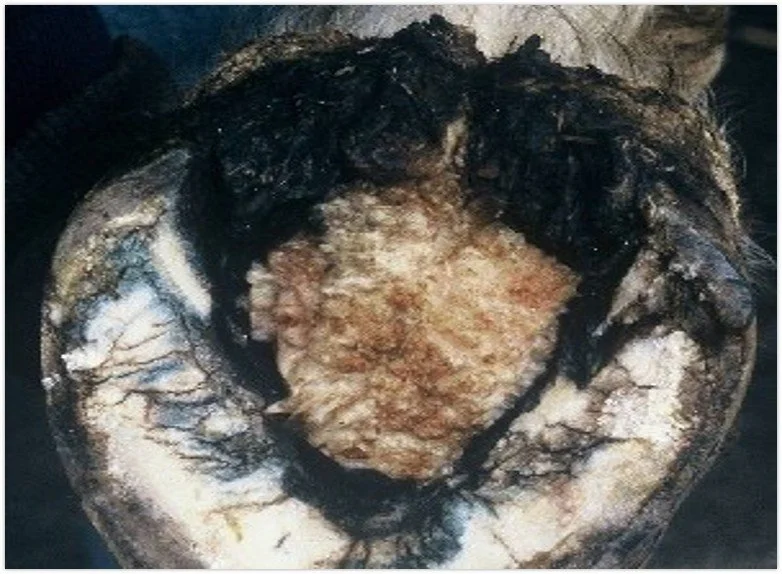
3. In the early stages canker may show as a focal area of granulation tissue in the frog that bleeds easily when abraded. (see photo below)
The above photo shows the granulated tissue that thrush will never produce, Note the enlargement of the whole frog. This granulated area will bleed very easily.
What to do if I suspect canker?
The good news is that canker is relatively uncommon. Most horses with an unhealthy frog simply have thrush, not canker. The key is recognising when something doesn't look or behave like ordinary thrush.
The single most important piece of advice I can give is this: contact your veterinary surgeon as soon as possible.
I know that sounds dramatic, but canker can progress quickly and becomes much more difficult to manage once it has spread. Early diagnosis and treatment give your horse the best possible chance of a successful outcome.
In advanced cases it can become a very serious welfare issue and, on rare occasions, may ultimately result in euthanasia.
I don't want to go into the treatment and farriery options here because that's beyond the scope of this article. My aim is to help you recognise the signs early and know when to seek veterinary advice. It’s thankfully quite rare but that’s no consolation if your horse is one of the unlucky ones.
I will end with some advice from Professor ‘Mad-Eye’ Moody from the Harry Potter books (my daughter’s favourite books)
CONSTANT VIGILANCE!