Understanding Hoof Abscesses
A hoof abscess is one of the most common causes of sudden, severe lameness in horses. Although dramatic in appearance, most abscesses make a full recovery when treated promptly and appropriately.
Understanding Hoof Abscesses
A hoof abscess is a localised collection of infection trapped within the hoof capsule. As pressure builds inside the rigid hoof wall, it produces the intense pain and sudden lameness that owners commonly witness.
It is not unusual for a horse to appear completely sound one moment and become severely lame within just a few hours.
Although the sudden onset can be alarming, most hoof abscesses are straightforward to treat and carry an excellent prognosis when managed promptly.
Why Do Hoof Abscesses Occur?
Hoof abscesses develop when bacteria gain entry into the foot.
One of the most common contributing factors is changing weather conditions. Alternating wet and dry periods cause the hoof capsule to repeatedly expand and contract. These small changes can allow bacteria to track into the foot through tiny defects in the white line, sole or hoof wall.
Warm temperatures may also encourage bacterial growth once bacteria have gained access.
Certain horses are more susceptible than others, particularly those with:
· Laminitis.
· Stretched white lines.
· Poor hoof quality.
· Collapsed or distorted feet.
In many cases, however, hoof abscesses are simply a matter of bad luck and can occur in otherwise healthy horses.
Clinical Signs
Typical signs include:
· Sudden, severe lameness.
· Increased digital pulse.
· Heat within the affected foot.
· Pain when hoof testers are applied.
· Reluctance to bear weight on the affected limb.
The severity of the lameness often surprises owners, with some horses appearing almost unable to walk despite the condition usually being very treatable.
Diagnosis and Treatment
Veterinary assessment is recommended whenever severe or sudden lameness develops.
Treatment involves locating and draining the abscess to relieve the pressure responsible for the pain.
Your veterinary surgeon has the equipment necessary to investigate the foot thoroughly and manage any treatment required following drainage. Depending on the depth and location of the abscess, further procedures may occasionally be required.
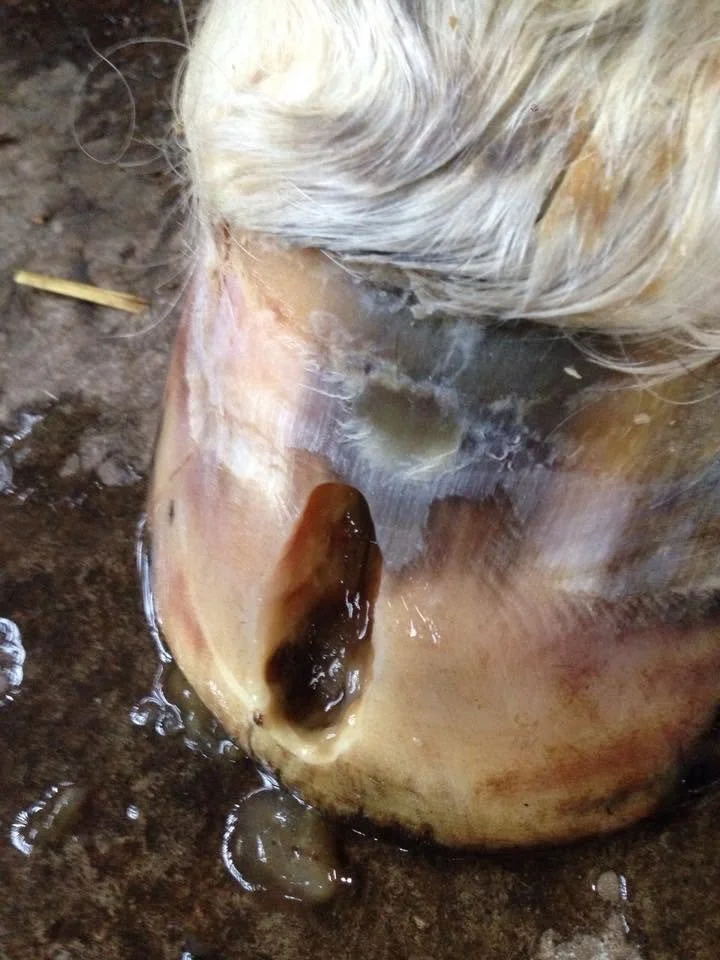
Some deeper abscesses may require surgical drainage or careful wall resection (Figure 1), while many are relatively superficial and are found either beneath the sole (subsolar) or beneath the hoof wall (submural).
Figure 1. Deep hoof abscess requiring drainage through the hoof wall. Not all abscesses require this level of intervention.
From practical experience, submural abscesses often produce the greatest discomfort because pressure becomes trapped beneath the rigid hoof wall. Once that pressure is relieved, horses frequently show an immediate improvement.
Prevention
Not every hoof abscess can be prevented.
However, sensible hoof management can reduce the risk.
Good stable hygiene, regular hoof picking and removing stones and packed mud from the feet all help reduce bacterial contamination.
Maintaining healthy hoof balance and addressing underlying hoof disease also reduces susceptibility over the long term.
Aftercare
Following your veterinary surgeon's or farrier's aftercare instructions is extremely important.
Cutting corners during recovery can allow bacteria to re-enter the foot, leading to reinfection and prolonging recovery.
Patience during the healing process often prevents having to start again.
Summary
· Hoof abscesses are a common cause of sudden severe lameness.
· Most develop after bacteria enter the hoof.
· Wet and dry weather cycles commonly increase risk.
· Prompt drainage usually results in rapid improvement.
· Good aftercare is essential to prevent recurrence.
A Final Thought
A hoof abscess often looks far worse than it is.
Prompt treatment, careful aftercare and a little patience usually result in an excellent outcome.
About the HØØF Knowledge Hub
The HØØF Knowledge Hub exists to provide horse owners with clear, practical and evidence-based information on hoof health, lower limb conditions and farriery.
Every horse is an individual, and no online article can replace professional assessment. If you have any concerns about your horse's health or soundness, always seek advice from your veterinary surgeon or registered farrier.
Article Information
Author: Paul Conroy BSc (Hons) AWCF
Organisation: HØØF Equine Hoof Care
Category: Hoof Health
Document Reference: HKH010
First Published: July 2026
Last Reviewed: July 2026
© 2026 HØØF Equine Hoof Care. All rights reserved.