Understanding Canker
Canker is an uncommon but potentially serious disease of the hoof that requires early recognition and prompt veterinary involvement to achieve the best possible outcome.
Understanding Canker
Canker is a chronic disease affecting the horn-producing tissues of the hoof. Although it is widely considered to involve an infectious component, the exact cause remains unclear.
The disease most commonly begins in the frog, but unlike thrush it has the ability to spread into the surrounding horn-producing tissues, including the sole, bars and hoof wall.
It is sometimes referred to as hoof rot or even hoof cancer, although neither term is technically accurate.
Why Canker Matters
Unlike thrush, which remains confined to the frog, canker has the ability to invade healthy horn-producing tissue throughout the hoof. Once established it may progressively involve the frog, sole, bars and hoof wall, making treatment considerably more challenging.
This invasive nature is what makes early recognition and prompt treatment so important.
Which Horses Are Most at Risk?
Canker may affect one foot or several feet. It is seen more commonly in draft breeds, traditional cobs and coloured horses with deep sulci and relatively small, recessed frogs, although any horse can be affected.
Historically, wet and unhygienic conditions have been blamed, but canker is also encountered in horses that receive excellent care and regular farriery.
One theory suggests that chronic thrush may weaken the frog sufficiently to allow canker to become established, although this has not been conclusively proven.
Clinical Signs
There are many signs, but three are particularly useful for horse owners.
• Canker usually begins in the frog and may initially resemble thrush or occur alongside it. Don't simply pick out the foot—take a moment to inspect the frog carefully.
• Thrush causes tissue destruction and shrinkage (atrophy). Canker is characterised by enlargement and overgrowth of abnormal tissue.
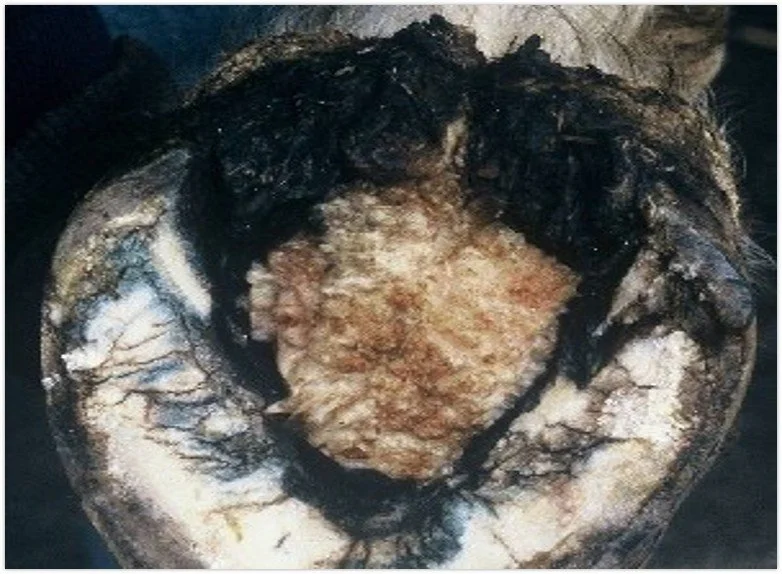
• In its early stages, canker often produces a focal area of granulation tissue that bleeds very easily when touched or lightly abraded. This is a feature that thrush does not produce.
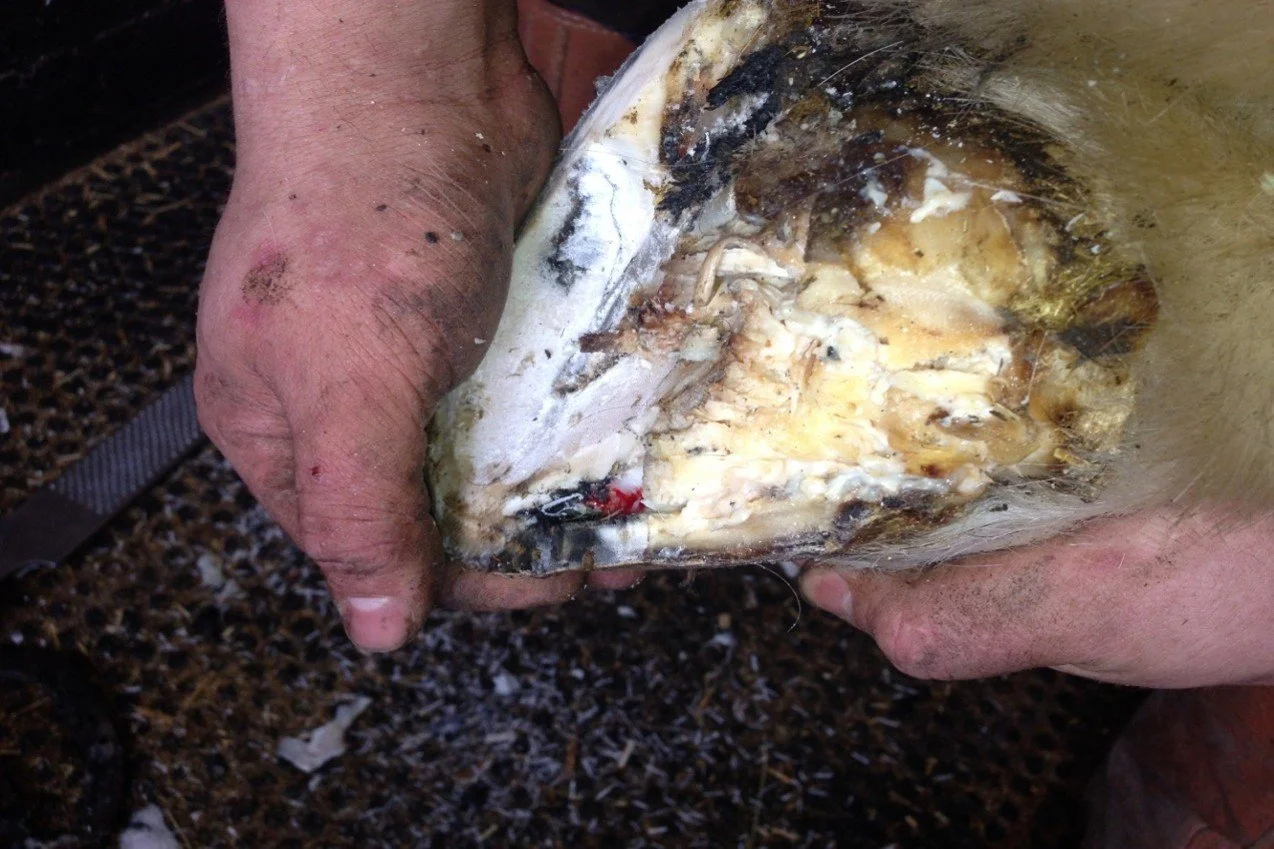
The above photo shows an advanced case of canker.
(notice how its invaded the lateral heel of the hoof)
Granulated frog tissue
What Should I Do If I Suspect Canker?
Fortunately, canker is relatively uncommon and most unhealthy frogs prove to be thrush rather than canker.
However, if the appearance of the frog seems unusual, continues to worsen despite treatment, or produces the characteristic granulation tissue, contact your veterinary surgeon as soon as possible.
Early diagnosis offers the best chance of successful treatment. Advanced cases can become extremely difficult to manage and, in rare situations, may ultimately become a serious welfare issue.
The aim of this article is to help horse owners recognise the warning signs early rather than discuss the specialist veterinary and farriery treatments available.
Summary
• Canker is a chronic disease affecting the horn-producing tissues of the hoof.
• Unlike thrush, it can invade the sole, bars and hoof wall.
• Tissue enlargement and bleeding granulation tissue are important warning signs.
• Early veterinary involvement offers the best chance of successful treatment.
• Most unhealthy frogs are thrush rather than canker, but unusual cases should never be ignored.
A Final Thought
Professor Alastor 'Mad-Eye' Moody's famous advice from the Harry Potter books was simple: 'Constant vigilance.'
He may have been talking about dark wizards, but the advice applies equally well to hoof care.
Developing the habit of looking carefully at your horse's feet every day remains one of the most valuable preventative measures any owner can take.
About the HØØF Knowledge Hub
The HØØF Knowledge Hub exists to provide horse owners with clear, practical and evidence-based information on hoof health, lower limb conditions and farriery.
Every horse is an individual, and no online article can replace professional assessment. If you have any concerns about your horse's health or soundness, always seek advice from your veterinary surgeon or registered farrier.
Article Information
Author: Paul Conroy BSc (Hons) AWCF
Organisation: HØØF Equine Hoof Care
Category: Hoof Health
Document Reference: HKH003
First Published: July 2026
Last Reviewed: July 2026
© 2026 HØØF Equine Hoof Care. All rights reserved.